The University of the Philippines Diliman, through the UP Center for International Studies (UPCIS), in partnership with the Embassy of Japan in Manila and The Japan Foundation Manila, will stage Noh performances in December 2026 as part of the commemoration of the 70 Years of Philippines–Japan Friendship, the 30th Anniversary of Japan Foundation, Manila, and the 20th Anniversary of the UPCIS Noh Ensemble. The project brings together nine esteemed Noh Grand Masters from Japan, the UPCIS Noh Ensemble – composed of Filipino Noh practitioners who are UP faculty, students and alumni – and artists from various disciplines in a collaborative effort to deepen engagement with traditional Japanese performing arts and enrich the cultural landscape of UP Diliman.
Noh, one of Japan’s oldest theatrical traditions and recognized by UNESCO as an Intangible Cultural Heritage of Humanity, embodies centuries of artistic discipline and cultural continuity. In 2006, Okina, the oldest and most sacred piece in the Noh repertoire and is traditionally performed on auspicious occasions, alongside the Dance of Sisa a Noh interpretation from the late National Artist Amelia Lapeña-Bonifacio’s Ang Paglalakbay ni Sisa: Isang Noh sa Laguna were staged to commemorate the 50th Anniversary of Philippines–Japan Friendship, hosted by then Japanese Foreign Minister Taro Aso and Philippine Department of Foreign Affairs Secretary Alberto Romulo.
Established in 2005, the UPCIS Noh Ensemble has played a pioneering role in introducing and sustaining Noh practice in the Philippines. For more than two decades, it has shared to the Filipino students and performers the Noh dance, chant, flute, and drums, serving as a vital bridge between Japanese master practitioners and the Philippine academic and cultural community.
Activities:
The program consists of the following activities:
- Exhibition of Edo-Period Noh Costumes and Masks
● A curated exhibition featuring authentic Edo-period Noh costumes, masks, and selected
artifacts.
● The exhibition will provide participants with a rare opportunity to appreciate the artistry,
symbolism, craftsmanship, and cultural significance of Noh.
Noh Lecture-Demonstration Workshop (first-come, first-served basis due to limited
seats)
6–7 December 2026, 1:00-2:00 PM
University Theater Lobby, University of the Philippines Diliman
9 December 2026, 4:00-5:00 PM
Carlos P. Romulo Auditorium Lobby, RCBC Plaza, Makati City
2. Noh Theatre Performance
6–7 December 2026 at 3:00 pm (Open to the Public)
University Theater, University of the Philippines Diliman
9 December 2026 at 7:30pm (Invitational)
Carlos P. Romulo Auditorium, RCBC Plaza, Makati City
● A special performance by the Umewaka-kai Philippine Performance Troupe, bringing
together nine distinguished Noh masters from Japan in collaboration with the UPCIS
Noh Ensemble.
● The performance offers students and educators an immersive experience of one of
Japan’s oldest living theatrical traditions and deepens their understanding of Asian
performing arts through direct cultural engagement.
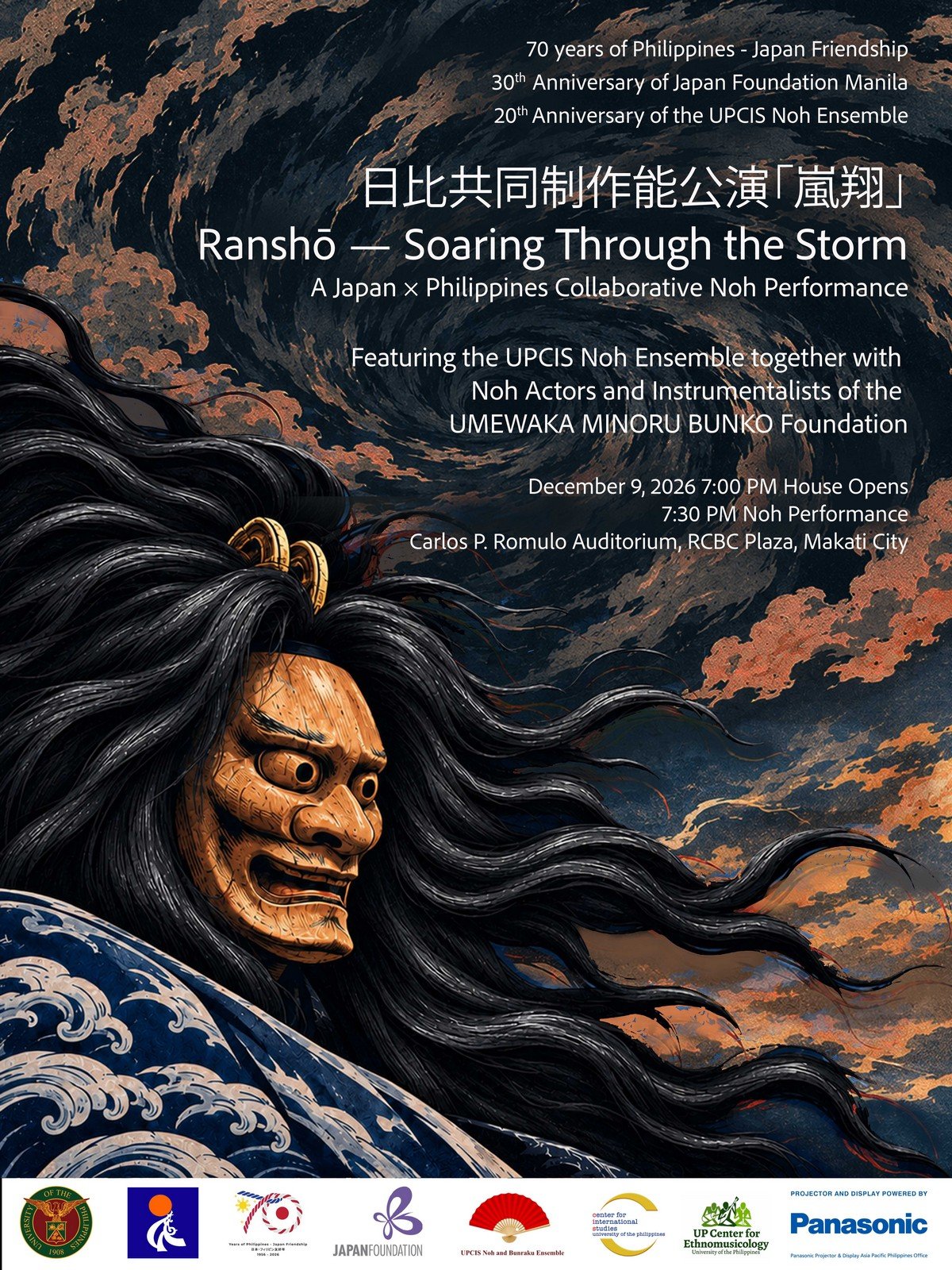
In celebration of the 70 Years of Philippines–Japan Friendship, the 30th Anniversary of Japan Foundation, Manila, and the 20th Anniversary of the UPCIS Noh Ensemble, the University of the Philippines Diliman, through the UP Center for International Studies (UPCIS), in partnership with the Japan Foundation, Manila, and the Embassy of Japan in the Philippines, will present 日比共同制作能公演「嵐翔」 Ranshō — Soaring Through the Storm: A Japan x Philippines Collaborative Noh Performance in December 2026.
Noh, one of Japan’s oldest theatrical traditions, dates back to the 14th century and is among the world’s oldest surviving forms of theater. Recognized by UNESCO as an Intangible Cultural Heritage of Humanity, it embodies centuries of artistic discipline, refined aesthetics, and cultural continuity. Combining poetic chanting, dance, and stylized movement with vocal and instrumental music, Noh features masked performers and explores profound themes of history, spirituality, nature, and human emotion.
In 2006, Okina, regarded as the oldest and most sacred piece in the Noh repertoire, and Dance of Sisa, based on the late National Artist Amelia Lapeña-Bonifacio’s Ang Paglalakbay ni Sisa: Isang Noh sa Laguna (The Journey of Sisa: A Noh in Laguna), were staged to commemorate the 50th Anniversary of Philippines–Japan Friendship, in an event hosted by then Japanese Foreign Minister Taro Aso and Philippine Secretary of Foreign Affairs Alberto Romulo.
Established in 2005, the University of the Philippines Center for International Studies (UPCIS) Noh Ensemble has played a pioneering role in introducing, teaching, and sustaining Noh practice in the Philippines. For more than two decades, UPCIS has collaborated with distinguished Noh masters from Japan to train Filipino students and performers in Noh dance, chant, flute, and drums. Through performances, workshops, and academic exchanges, the Ensemble serves as a vital bridge between Japanese master practitioners and the Philippine academic and cultural communities, promoting intercultural understanding and appreciation of Japan’s traditional theater
In line with the Department of Education (DepEd) K–12 Arts Curriculum, particularly the Grade 8 lessons on Asian Theater and Music in which Noh theatre is introduced, as well as relevant tertiary humanities, literature, and performing arts courses, the program offers a rare opportunity to move beyond textbook learning through immersive cultural experiences. Through introductory workshops, an exhibition of Edo-period Noh costumes and masks, and the opportunity to witness live performances by nine (9) distinguished Noh masters from Japan together with the UPCIS Noh Ensemble, participants will gain a deeper appreciation of the aesthetics, history, philosophy, and performance traditions of Noh.
By connecting classroom instruction with firsthand cultural engagement, the program seeks to deepen students’ understanding of Asian performing arts, foster intercultural understanding, promote appreciation of shared Asian heritage, and reinforce the enduring friendship between the Philippines and Japan, particularly as both countries commemorate the 70 Years of Philippines–Japan Friendship.
Ransho: Paglusong sa Sigwa (Soaring Through the Storm) is an original Japan x Philippines collaborative production that reimagines the iconic Japanese animated series Voltes V through the aesthetics, dramaturgy, and performance conventions of traditional Noh theater.
Conceived as a FilipiNoh production, Ranshō brings together two distinct yet interconnected cultural expressions: Voltes V the Japanese animated series that has become deeply embedded in Filipino popular culture and Noh, Japan’s centuries-old theatrical tradition. Through this creative reinterpretation, the familiar themes of Voltes V — friendship, unity, sacrifice, courage, and the struggle for justice and freedom — are woven into a narrative that draws inspiration from Philippine history and the Filipino people’s enduring struggle against oppression, injustice, and forces that threaten their freedom and dignity. The story evokes the collective memory of resistance, the sacrifices of those who fought for the nation, and the continuing aspiration for a more just and peaceful society.
These themes are transformed into a compelling theatrical experience expressed through Noh’s symbolic movements, chant, music, masks, and poetic imagery. The production uses the imagery of a storm as a metaphor for the challenges confronting individuals and communities, including calamities, injustice, social neglect, and the struggle to overcome adversity. The act of soaring through the storm represents collective courage, solidarity, endurance, and the hope of healing and renewal.
Beyond its innovative artistic approach, Ranshō seeks to demonstrate how traditional performing arts can engage contemporary audiences and reinterpret shared cultural memories. By bringing Voltes V into dialogue with Noh, the production creates a distinctive Japan–Philippines artistic expression that celebrates cultural friendship while exploring universal human values and contemporary social concerns.
#70YearsPHJapanFriendship #Ransho2026 #arkadymac
About The Author